Monday, March 29, 2021

Journal of the Contemporary Study of Islam


Publisher: London : Institute for the Contemporary Study of Islam, 2020-
ISSN: 2633-7282

"The Journal of the Contemporary Study of Islam was launched in 2019 by the Institute for the Contemporary Study of Islam, based in the UK, to investigate Islam and Muslims in the contemporary world. Although we may consider any submissions that fall within the scope of the journal, we are keen on publishing articles that address some of the most pressing issues that Muslims face in the contemporary world, such as: innovative methods in Islamic law; developing trends in the Muslim world (e.g. new forms of Atheism, Deism, and Agnosticism); Islam and politics; sectarianism in the Muslim world; Islamophobia; Islam and social change; Islam and human rights; Muslim-Christian relations; methodological developments in Quranic studies; and hadith studies.

The JCSI aims to reach wider readership beyond the academy, and thus we suggest authors avoid technical language in their submissions. The journal is open access; free of cost for authors and readers alike with unrestricted online access for readers.

The JCSI evaluates manuscripts through a double-blind peer-review process. The journal is published quarterly, and every issue includes original scholarly contributions as well as critical book reviews. We also accept short responses to articles published in the journal.

Once your paper has been assessed for suitability by the editorial team, it will then be peer-reviewed by at least two independent, anonymous expert referees. Response time is generally within two months."

URL: https://contemporarystudyofislam.org/index.php/jcsi/issue/view/3


Saturday, March 27, 2021

New OA Book: Practices of Commentary


Congratulations to Christina Lechtermann and Markus Stock on the publication of their volume, “Practices of Commentary,” published in the Zeitsprünge series. This book arose out of a conference held at the Goethe Universität Frankfurt am Main, in December 2018, where scholars from both the University of Toronto and the Goethe University convened to consider the boundaries of commentary. The introductory chapter of this volume (by Christina Lechtermann and Markus Stock) presents a number of questions about the nature of commentary and leads into a series of premodern case studies in the fields of Arabic, English, German, Jewish, Latin, and Romance studies. Read the text in full below.

A hearty congratulations also to the contributors of this volume, many of whom are currently involved with the Global Commentary project:
Stefanie Brinkmann, “Marginal Commentaries in Ḥadīṯ Manuscripts.”
Walid Saleh, “The Place of the Medieval in Qur’an Commentary: A Survey of Recent Editions.”
Jeannie Miller, “Commentary and Text Organization in al-Jāḥiẓ’s Book of Animals.”
Suzanne Akbari, “Ekphrasis and Commentary in Walter of Chatillon’s Alexandreis.”
Jennifer Gerber, “About Form and Function of German Vernacular Commentaries.”
Christina Lechtermann, “Commentary as Literature: The Medieval ‘Glossenlied.'”
Philip Stockbrugger, “Mirroring Authorization in Torquato Tasso’s Rime Amorose.”

URL: https://globalcommentary.utoronto.ca/?p=654. Direct download of the book: https://globalcommentary.utoronto.ca/wp-content/uploads/2021/03/Practices-of-Commentary-Zeitspru%CC%88nge-Forschungen-zur-Fru%CC%88hen-Neuzeit.pdf.

Friday, March 26, 2021

New Open Access Journal: Journal of Material Cultures in the Muslim World

Journal of Material Cultures in the Muslim World

Editor-in-Chief: Stéphane Pradines

"Journal of Material Cultures in the Muslim World (MCMW) aims to be a new reference for field archaeologists, (art) historians, anthropologists, curators, and scholars and students of the (art) history, archaeology, architecture, anthropology & ethnography of the Muslim world. This readership represents a new broader definition of material culture that includes not only artefacts, architectural structures and monuments, but also crafts. The journal also aims to inform (other) disciplines and historiographies, by including (unreviewed) archaeological field surveys for example. 

The journal focuses on un(der)explored Muslim regions outside of the Middle East and Nord Africa: sub-Saharan Africa, the Indian Ocean, Central Asia, India, South-East Asia and Europe. 

The journal accepts submissions in English, French, German and Spanish and short reports in Arabic, Persian and Turkish with an English abstract."

Submissions should be sent to the Editor-in-Chief, Stéphane Pradines, at Stephane.Pradines@aku.edu 

Frequency: 1 volume per year, 2 issues per volume 

Expected date of publication of the inaugural double issue: October 2020. 

Publisher: Brill

ISSN: 2666-6278

ISSN: 2666-6286

See also: Alphabetical List of Open Access Journals in Middle Eastern Studies


Open Access Journal: Journal of Islamic Ethics

Editor: Mohammed Ghaly
"The focus of the Journal of Islamic Ethics is on the ethical approaches embedded in Islamic philosophy, theology, mysticism and jurisprudence as well as Islamic civilization in general, and, more particularly, on the principles and methods (to be) followed in applying these approaches to various sectors of contemporary social life. These fields include: Arts, Environment, Economics, Education, Gender, Media, Medicine, Migration & Human Rights, Politics and Psychology. The Journal will strongly focus on thematic issues on current events as well as on individual empirical case studies. 

The Journal of Islamic Ethics is a full Open Access journal sponsored by the Research Center of Islamic Legislation and Ethics in Doha (Qatar), which is affiliated to the Faculty of Islamic Studies, Hamad Bin Khalifa University."

Publisher: Brill
ISSN: 2468-5534/ Online ISSN: 2468-5542


Open Access E-Book: The Maghrib in the Mashriq Knowledge, Travel and Identity


Edited by: Maribel Fierro and Mayte Penelas
De Gruyter | 2021
ISBN 9783110713305 (e-book)/ 9783110712698 (hardcover)

This is a pioneering book about the impact that knowledge produced in the Maghrib (Islamic North Africa and al-Andalus = Muslim Iberia) had on the rest of the Islamic world.
It presents results achieved in the Research Project "Local contexts and global dynamics: al-Andalus and the Maghrib in the Islamic East (AMOI)", funded by the Spanish Ministry of Science, Innovation and Universities and directed by Maribel Fierro and Mayte Penelas.

The book contains 18 contributions written by senior and junior scholars from different institutions all over the world. It is divided into five sections dealing with how knowledge produced in the Maghrib was integrated in the Mashriq starting with the emergence and construction of the concept 'Maghrib' (sections 1 and 2); how travel allowed the reception in the Maghrib of knowledge produced in the Mashriq but also the transmission of locally produced knowledge outside the Maghrib, and the different ways in which such transmission took place (sections 3 and 4), and how the Maghribis who stayed or settled in the Mashriq manifested their identity (section 5).The book will be of interest not only for those whose research concentrates on the Maghrib but more generally for those who want to understand the complex and shifting dynamics between 'centres' and 'peripheries' as regards intellectual production and circulation."


Friday, March 19, 2021

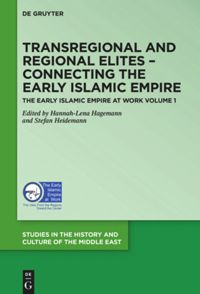
Open Access E-book: Transregional and Regional Elites – Connecting the Early Islamic Empire


Transregional and Regional Elites – Connecting the Early Islamic Empire

Volume 1

Edited by: Hannah-Lena Hagemann and Stefan Heidemann

De Gruyter | 2020

ISBN 9783110669800 (ebook)/ 9783110666489 (hardcover)

DOI: https://doi.org/10.1515/9783110669800

"Transregional and regional elites of various backgrounds were essential for the integration of diverse regions into the early Islamic Empire, from Central Asia to North Africa. This volume is an important contribution to the conceptualization of the largest empire of Late Antiquity. While previous studies used Iraq as the paradigm for the entire empire, this volume looks at diverse regions instead. After a theoretical introduction to the concept of ‘elites’ in an early Islamic context, the papers focus on elite structures and networks within selected regions of the Empire (Transoxiana, Khurāsān, Armenia, Fārs, Iraq, al-Jazīra, Syria, Egypt, and Ifrīqiya). The papers analyze elite groups across social, religious, geographical, and professional boundaries.

Although each region appears unique at first glance, based on their heterogeneous surviving sources, its physical geography, and its indigenous population and elites, the studies show that they shared certain patterns of governance and interaction, and that this was an important factor for the success of the largest empire of Late Antiquity" 

The contents of the book can be seen here


Thursday, March 18, 2021

Open Access E-Book: Arabic translation of : Remote Capture: Digitising Documentary Heritage in Challenging Locations

Edited by: Jody Butterworth, Andrew Pearson, Patrick Sutherland and Adam Farquhar.
Published by: Open Book Publishers (Cambridge, UK)

© 2021. Arabic Translation by Nouran Ibrahim Abdelraouf.

ISBN Digital ebook (epub): 9781783744763
ISBN Digital ebook (mobi): 9781783744770
DOI: 10.11647/OBP.0138


 "In 2020, EAP received a generous grant from the Barakat Trust to translate Remote Capture: Digitising Documentary Heritage in Challenging Locations into Arabic as part of outreach within the Middle East and North Africa regions. Nouran Ibrahim Abdelraouf did all the hard work of translating the book and now that it is available online via the EAP website, we thought it would be the right time to ask her a few questions that we could share on our blog."