 |
| Al-Hajj Hafiz Muhammad Nuri, Turkey, 1801 |
OAI respects the privacy of its users by adopting completely anonymous tracking technologies.
|
| Al-Hajj Hafiz Muhammad Nuri, Turkey, 1801 |
OAI respects the privacy of its users by adopting completely anonymous tracking technologies.


What is the Qatar Digital Library?
The Qatar Digital Library (QDL) is making a vast archive featuring the cultural and historical heritage of the Gulf and wider region freely available online for the first time. It includes archives, maps, manuscripts, sound recordings, photographs and much more, complete with contextualised explanatory notes and links, in both English and Arabic.
How did the QDL come about?
The QDL has been developed as part of a 10-year Memorandum of Understanding on Partnerships between the Qatar Foundation, the Qatar National Library and The British Library. The website was developed by the Partnership in collaboration with Cogapp. The agreement of work for the first phase of the Partnership began in 2012, with the digitisation of a wide range of content from the British Library’s collections. Find out more about the Partnership.
Filter by document source:
- (-) Remove Items in the archive filter Items in the archive
Filter by subject:
Filter by place:
Filter by type:
Filter by people & organisations:


"The United Nations Relief and Works Agency (UNRWA) is proud to unveil the first part of its newly digitized archive, which consists of over half a million negatives, prints, slides, films and videocassettes covering all aspects of the life and history of Palestine refugees from 1948 to the present day.
The first group of iconic photographs and films are part of an exhibition, ‘The Long Journey’, which opens on 28 November at the Al-Ma’mal Centre in the Old City of Jerusalem. The archive was inscribed on the UNESCO ‘Memory of the World’ register, which includes collections of outstanding cultural and historical significance."
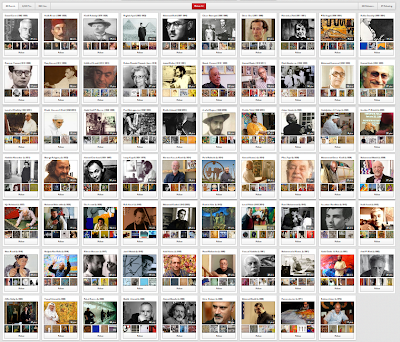
| Abdallah Benanteur (b.1931) |
| Abdul Hadi El-Gazzar (1925-1965) |
| Abdul Qader Al Rais (b.1951) |
| Abduljabbar Al Yahya (b.1929) |
| Adam Henein (b.1929) |
| Adel El Siwi (b.1952) |
| Afifa Aleiby (b.1953) |
| Ahmad Moualla (b.1958) |
| Ahmad Nawash (b.1934) |
| Ahmed Cherkaoui (1934-1967) |
| Aref el Rayess (1928-2005) |
| Assadour Bezdikian (b.1943) |
| César Gemayel (1898-1958) |
| Chaibia Tallal (1929-2004) |
| Daoud Corm (1852-1930) |
| Dia Azzawi (b.1939) |
| Effat Nagui (1905-1994) |
| Elias Zayat (b.1935) |
| Faeq Hassan (1914-1992) |
| Fahrelnisa Zeid (1901-1991) |
| Faisal Samra (b.1955) |
| Farid Belkahia (b.1934) |
| Fateh Moudarres (1922-1999) |
| Fouad Bellamine (b.1950) |
| George Bahgoury (b.1932) |
| Habib Srour (1860-1938) |
| Hafidh al-Droubi (1914-1991) |
| Hamed Nada (1924-1990) |
| Hamed Oweis (1919-2011) |
| Ibrahim El-Salahi (b.1930) |
| Ismail al Sheikhly (1924-2001) |
| Ismail Fattah (1943-2004) |
| Jamil Molaeb (b.1948) |
| Jawad Salim (1919-1961) |
| Khalil Saleeby (1870-1928) |
| Louay Kayali (1934-1978) |
| Mahjoub Ben Bella (b.1946) |
| Mahmoud Hammad (1923-1988) |
| Mahmoud Said (1897-1964) |
| Mahmud Obaidi (b.1966) |
| Marwan Kassab Bachi (b.1934) |
| Modhir Ahmed (b.1956) |
| Mohamed Kacimi (1942-2003) |
| Mohamed Muhraddin (b.1938) |
| Mohammad el Rawas (b.1951) |
| Mohammed Melehi (b.1936) |
| Mohammed Omar Khalil (b.1936) |
| Mona Saudi (b.1945) |
| Mounir Canaan (1919–1999) |
| Nabil Anani (b.1943) |
| Nabil Nahas (b.1949) |
| Nizar Sabour (b.1958) |
| Nja Mahdaoui (b.1937) |
| Omar Onsi (1901-1969) |
| Paul Guiragossian (1926-1993) |
| Rafa Nasiri (b.1940) |
| Ragheb Ayad (1892-1982) |
| Ramses Younan (1913-1966) |
| Sabhan Adam (b.1972) |
| Saliba Douaihy (1909-1994) |
| Saloua Raouda Choucair (born 1916) |
| Sami Mohammed (b.1943) |
| Shafic Abboud (1926-2004) |
| Shakir Hassan Al Said (1925-2004) |
| Sliman Mansour (b.1947) |
| Suad al-Attar (b.1942) |
| Yousef Ahmed (b.1955) |
| Youssef Abdelke (b.1951) |
| Zaman Jassim (b.1971) |
 Pitt Rivers Museum Prints
 "This website offers a FREE download of over 4000 images of patterns and other design features drawn from the rich cultural heritage of the Islamic world. Historically, the decorative arts have always formed a major part of Islamic aesthetic expression. Its remarkable achievements in this direction (much of which are represented here) make it an invaluable resource for designers of all kinds as well as for art-historians and art-lovers generally."
Online Archive Educates and Encourages Public Participation to Trace Lost Works
The Modern Art Iraq Archive (MAIA), located at http://artiraq.org/maia/, was made public this week. MAIA started as the result of a long-term effort to document and preserve the modern artistic works from the Iraqi Museum of Modern Art in Baghdad, most of which were lost and damaged in the fires and looting during the aftermath of the 2003 US invasion of Iraq. As the site shows, very little is known about many of the works, including their current whereabouts and their original location in the Museum. The lack of documents about modern Iraqi art prompted the growth of the project to include supporting text. The site makes the works of art available as an open access database in order to raise public awareness of the many lost works and to encourage interested individuals to participate in helping to document the museum’s original and/or lost holdings.
The MAIA site is the culmination of seven years of work by Project Director Nada Shabout, a professor of Art History and the Director of the Contemporary Arab and Muslim Cultural Studies Institute (CAMCSI, http://www.art.unt.edu/camcsi.html) at the University of North Texas. Since 2003, Shabout has been collecting any and all information on the lost works through intensive research, interviews with artists, museum personnel, and art gallery owners. Shabout received two fellowships from the American Academic Research Institute in Iraq (TAARII, http://www.taarii.org/) in 2006 and 2007 to conduct the first phase of data collection. In 2009, she teamed with colleagues at the Alexandria Archive Institute (http://alexandriaarchive.org), a
California-based non-profit organization dedicated to opening up global cultural heritage for research, education, and creative works. The team won a Digital Humanities Start-Up Grant from the U.S. National Endowment for the Humanities (http://neh.gov) to create an open, comprehensive virtual archive of the works that were once housed in Museum’s various galleries. These significant national treasures are displayed in an open format that invites worldwide use, including the Iraqi national and expatriate communities, and users are encouraged to help identify and further document individual pieces.
The aim of MAIA is to map out the modern art’s development in Iraq during the twentieth century and be a research tool to scholars, students, authorities, and the general public, as well as raise awareness of the rich modern heritage of Iraq. Furthermore, the creation of an authoritative and public inventory of the collection will not only act as a reminder of their cultural value and thus hopefully hasten their return, but will help combat smuggling and black market dealings of the works.

More than 40,000 images are available in one of the world's largest archives specializing in historic and current images of the Middle East and the Islamic world.
Most of the images on line are published and unpublished images from the bimonthly magazine "Aramco World, from 1964 to 2000, and Saudi Aramco World, to the present.
Advanced search allows to retrieve images by category, location, artist or caption.


