Showing posts with label Arab-Israeli conflict. Show all posts

Thursday, June 2, 2022

The Interactive Encyclopedia of the Palestine Question


From the official announcement: 
"The Institute for Palestine Studies is proud to present
The Interactive Encyclopedia of the Palestine Question, which it has been developing as part of a joint project with the Palestinian Museum.

The fully bilingual (English–Arabic) platform is entirely devoted to the history of modern Palestine, from the end of the Ottoman era to the present. The Encyclopedia, the first of its kind, was developed for use by academics, students, journalists, and the general public. It currently consists of the following sections:

An Overall Chronology that presents the main events and developments that shaped Palestinian modern history in the realms of war, diplomacy, politics, culture, and economy;

Thematic Chronologies, or subsets of the Overall Chronology, that facilitate access to entries relevant to specific topics;

Highlights, written by leading academics and experts in the field, that cover important events and institutions, political, military and legal-constitutional developments, as well as crucial aspects of Palestinian cultural, social, or economic life or experience;

Biographies of Palestinian intellectuals, artists, leaders, combatants, and politicians who have influenced the history of Palestine since the late nineteenth and early twentieth centuries;

Places, the digitized version of the seminal book All That Remains, dedicated to the 418 Palestinian villages destroyed in 1948;

Documents, consisting of hundreds of primary texts, photographs, maps, and charts. The Encyclopedia has come to fruition following years of preparation and several stages of implementation. Throughout this process, utmost attention has been given to introduce a description of the Palestine Question that is simultaneously committed and objective and to present Palestinians as they are—purposeful actors, and not just victims, who build with both successes and setbacks their political, social, and cultural institutions inside and outside Palestine.
The Encyclopedia will be continually upgraded and populated with additional content. To help us improve it further, we need your feedback and suggestions; write to us at palquest@palestine-studies.org.

We wish you a stimulating navigation!
Camille Mansour
Editor in Chief"

Friday, October 24, 2014

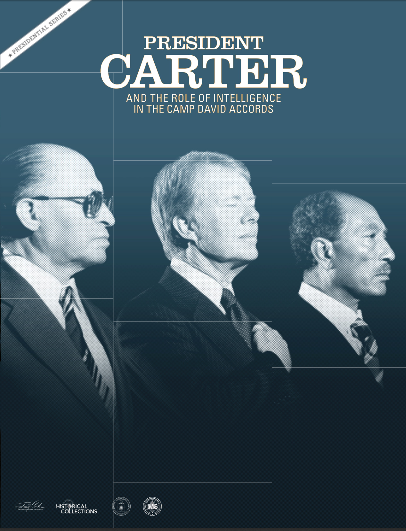
President Carter and the Role of Intelligence in the Camp David Accords

https://www.cia.gov/library/publications/historical-collection-publications/president-carter-and-the-camp-david-accords/index.html


President Carter and the Role of Intelligence in the Camp David Accords


"This collection consists of more than 250 previously classified documents, totaling over 1,400 pages, including some 150 that are being released for the first time.  These documents cover the period from January 1977 through March 1979 and were produced by the CIA to support the Carter administration’s diplomatic efforts leading up to President Carter’s negotiations with Egyptian President Anwar Sadat and Israeli Prime Minister Menachem Begin at Camp David in September 1978. The declassified documents detail diplomatic developments from the Arab peace offensive and President Sadat’s trip to Jerusalem through the regionwide aftermath of Camp David. Newly released items include:

    Two National Intelligence Estimates on Egypt and the Middle East Military Balance.
    Selections from CIA’s briefing book on Camp David created for President Carter.
    Leadership profiles from the Directorate of Intelligence on the key personalities of the Camp David summit.
    Intelligence on informal and formal inter-Arab negotiations and divisions between Israeli political parties with regard to the peace initiative and summit.
    The role of Jordan in the peace process
    Over four hundred pages of Foreign Broadcast Information Service reporting, capturing the press coverage of the negotiations, summit, and global reaction."

Monday, September 29, 2014

Open Access Report: The Lawless Zone

http://www.yesh-din.org/userfiles/file/Reports-English/Yesh%20Din_The%20Lawless%20Zone_Web_EN.pdf

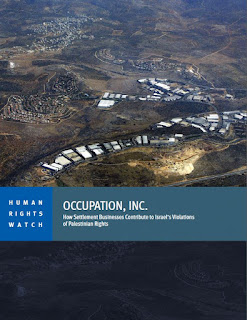
The Lawless Zone report : the transfer of policing and security to the Civilian Security Coordinators in the settlements and outposts.
Published: Tel Aviv : Yesh Din, 2014
Description: 54 p. : col. ill. ; 24 cm.

See other publications by Yesh Din: 

Friday, September 21, 2012

Open Access Journal: Human rights in the occupied territories : annual report


Human rights in the occupied territories : annual report.
Author:     Be-tselem (Organization : Jerusalem)
Publisher: Jerusalem : B'TSELEM, the Israeli Information Center for Human Rights in the Occupied Territories, 2007-.


Other titles:
B'tselem human rights in the occupied territories
Matsav zekhuyot ha-ʾadam ba-sheṭaḥim ha-kevutshim

Also in: Hebrew and Arabic
Frequency: Annual
ISSN: 0792-8114

See the Alphabetical list of Open Access Journals in Middle Eastern Studies 

Open Access Journal: Report on Israeli settlement in the occupied territories


Report on Israeli settlement in the occupied territories : a bimonthly publication of the Foundation for Middle East Peace.
Author:     Foundation for Middle East Peace (Washington, D.C.)
Publisher:     Washington, D.C. : Foundation for Middle East Peace

Frequency: Bimonthly
Published: 1991-

See the Alphabetical list of Open Access Journals in Middle Eastern Studies  


Sunday, August 19, 2012

Foreign Relations of the United States, 1969–1976, Volume XXVI, Arab-Israeli Dispute, 1974–1976


Foreign Relations of the United States, 1969–1976, Volume XXVI, Arab-Israeli Dispute, 1974–1976

ISBN 9780160829987
Office of the Historian
Bureau of Public Affairs
United States Department of State

"August 15, 2012. The Department of State released today Foreign Relations of the United States, 1969–1976, Volume XXVI, Arab-Israeli Dispute, 1974–1976. The focus of this volume is the negotiations leading to the two disengagement agreements between Egypt and Israel and the one disengagement agreement between Syria and Israel. The end of the October 1973 War left the Egyptian and Israeli armies interlocked in the Sinai and Israeli and Syrian armies interlocked in the Golan Heights. This provided Secretary of State Henry Kissinger, who had taken the lead role in negotiations concerning the Arab-Israeli dispute after the October 1973 War, the opportunity to negotiate landmark agreements between Israel and two of its Arab neighbors in the months following the war. Initial discussions between Kissinger and Arab leaders began in November 1973 (coverage of this is found in Foreign Relations, 1969-1976, volume XXV, Arab-Israeli Crisis and War, 1973) and culminated in formal disengagement agreements beginning in 1974..."