Showing posts with label E-Books. Show all posts

Thursday, May 22, 2025

Three Open Access Books on the Silk Roads: by UNESCO


"The most astonishing innovations and fusions of the world’s religions, beliefs, and material cultures have occurred along the trade and communication networks between Asia, Africa, and Europe, known today as the Silk Roads. The empires and dynasties, fluctuating like ebbs and flows, triggered waves of cultural interchange across time and space, connected by caravans of knowledge and technological transfers crossing vast distances over barren steppes, impenetrable deserts, and unsurmountable ranges. This three-part volume on Architecture, Monuments and Urbanism explores cities and ports from Nanjing to Seville and Karakorum to Mumbai as individual pearls in a long string of historical vicissitudes and cultural exchanges across the overland Silk Roads and maritime Silk Routes." 


Editors: Paskaleva, Elena; Turner, Michael 
DOI: https://doi.org/10.54678/JNRQ3162
ISBN: 978-92-3-100738-5
Collation: 343 pages : illustrations, maps
Language: English
Year of publication: 2025
Licence type: CC BY-SA 3.0 IGO


Editors: Paskaleva, Elena; Turner, Michael 
Series title and vol / issues: Thematic collection of the cultural exchanges along the Silk Roads 
DOI:https://doi.org/10.54678/VMIH5884
ISBN: 978-92-3-100738-5
Collation: 375 pages : illustrations, maps
Language: English
Year of publication: 2025
Licence type: CC BY-SA 3.0 IGO 


Editors: Paskaleva, Elena; Turner, Michael 
Series title and vol / issues: Thematic collection of the cultural exchanges along the Silk Roads
DOI: https://doi.org/10.54678/RUOM2593
ISBN: 978-92-3-100738-5
Collation: 347 pages : illustrations, maps
Language: English
Year of publication: 2025
Licence type: CC BY-SA 3.0 IGO [14411]

Friday, January 24, 2025

OA-Book: Mechanisms of Social Dependency in the Early Islamic Empire


Mechanisms of Social Dependency in the Early Islamic Empire

Editors: Edmund Hayes and Petra M. Sijpesteijn

Date Published: November 2024

Hardback isbn: 9781009384261

Available in Open Access (gold)

" The success of Islamic imperialism in the period from the conquests to the Ayyubid dynasty has traditionally been explained as purely the result of military might. This book, however, adopts a bottom-up approach which puts social relationships and local power dynamics at the centre of the Islamic empire's cohesion. Its chapters draw on sources in diverse languages: not just Arabic, but also Greek, Coptic, Syriac, Hebrew, and Bactrian, showing how different linguistic communities intersected and contributed to a connected yet diverse empire. They highlight how not just literary and historical texts, but also physical documents and archaeological evidence should be incorporated into writing histories of the late antique and early medieval Middle East. Social institutions and relationships explored include oaths; petitions, decrees, and begging letters; and financial frameworks such as debt and taxation. This title is also available as Open Access on Cambridge Core.

Provides a new framework for understanding how the early Islamic empire, and pre-modern empires more broadly, worked together through cooperation and interdependence as well as through coercion

Shows how different linguistic communities intersected and contributed to a connected yet diverse empire

Uses physical documents and archaeological evidence as well as literary and historical texts in order to produce a broader picture"


Wednesday, December 18, 2024

OA Book: Venice and the Ottoman Empire: A Tale of Art, Culture, and Exchange

 Venice and the Ottoman Empire: A Tale of Art, Culture, and Exchange


"Accompanying a major traveling exhibition, this book examines the unique artistic and cultural exchange between the Republic of Venice and Turkish Ottoman culture and identity over a three-hundred-year period. 

From the early Renaissance to the end of the eighteenth century, Venice held a central position in the global trade network. This book explores how artistic and cultural ideas originating in the Ottoman Empire arrived in Venice and were reinterpreted through the decorative arts, printed books, painting, drawing, and architecture. 

Featuring a richly diverse selection from the collections of the Musei Civici di Venezia, this volume showcases the creative contributions of well-known Venetian artists such as Vittore Carpaccio, Gentile Bellini, Michele Giambono, and Mariano Fortuny alongside works created by the best anonymous craftspeople both in Venice and the Ottoman Empire, including textiles, metalwork, armor, and ceramics. With newly researched essays by esteemed international scholars on topics such as trade routes, the involvement of international communities in Venice, diplomatic interactions, and military power dynamics, this important volume offers freshly reviewed and new perspectives on the intricate artistic relationship that existed between Venice and the Ottoman Empire. 

About The Author Stefano Carboni was the inaugural CEO of the Museums Commission of the Ministry of Culture of the Kingdom of Saudi Arabia (2019–23); director and CEO of the Art Gallery of Western Australia (2008–19); and curator and administrator in the Department of Islamic Art at the Metropolitan Museum of Art (1992–2008). He is adjunct professor at the University of Western Australia."

URL: https://insight.randomhouse.com/widget/v4/?width=600&height=800&isbn=9780847838790 


Tuesday, July 23, 2024

Open Access Book: نهج البلاغة = Nahj al-balāghah : the wisdom and eloquence of ʻAlī

Nahj al-balāghah : the wisdom and eloquence of ʻAlī : a parallel English-Arabic text / compiled by al-Sharīf al-Raḍī (d. 406/1015)., et al. 

نهج البلاغة : من كلام امير المؤمنين علي بن أبي طالب صلوات الله عليه. 

Translated by Tahera Qutbuddin.

Published: Brill, Leiden, 2024

ISBN: 9789004682603, 9004682600


Wednesday, March 22, 2023

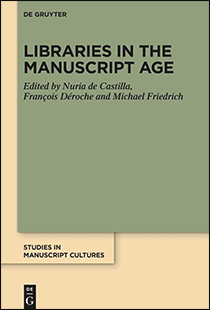
Open Access Book: Libraries in the Manuscript Age


Title: Libraries in the Manuscript Age

Contributors: Luciano Bossina, Nuria de Castilla, Gérard Colas, Jean-Pierre Drège, François Déroche, Michael Friedrich, Vanina Kopp, Donatella Nebbiai 
ISBN: 9783110779653


Summary:
"The case studies presented in this volume help illuminate the rationale for the founding of libraries in an age when books were handwritten, thus contributing to the comparative history of libraries. They focus on examples ranging from the seventh to the seventeenth century emanating from the Muslim World, East Asia, Byzantium and Western Europe. Accumulation and preservation are the key motivations for the development of libraries. Rulers, scholars and men of religion were clearly dedicated to collecting books and sought to protect these fragile objects against the various hazards that threatened their survival. Many of these treasured books are long gone, but there remain hosts of evidence enabling one to reconstruct the collections to which they belonged, found in ancient buildings, literary accounts, archival documentation and, most crucially, catalogues. With such material at hand or, in some cases, the manuscripts of a certain library which have come down to us, it is possible to reflect on the nature of these libraries of the past, the interests of their owners, and their role in the intellectual history of the manuscript age..."

Open Access Book: Muslim Cultures of the Indian Ocean


Author: Pradines, Stéphane
Title: Muslim Cultures of the Indian Ocean : Diversity and Pluralism Past and Present.
Published: Edinburgh: Edinburgh University Press; 2023.
ISBN:  9781474486521

Summary:

"Scholars are increasingly recognising the centrality of the Indian Ocean in the study of Muslim cultures.
This volume explores the expanding and changing roles of these Muslim communities across the Indian Ocean World from the seventh century to the mediaeval period to the present day. The book goes beyond the usual focus on geographical sub-regions to highlight different aspects of interconnectivity in relation to Islam. By analysing textual and material evidence, the fifteen papers in this volume examine identities and diasporas, manuscripts and literature, as well as vernacular and religious architecture. It explores the networks and movements of peoples, ideas and ideologies, as well as art, culture, religion and heritage."


Monday, May 16, 2022

Open Access E-Book: Empires and Communities in the Post-Roman and Islamic World, C. 400-1000 CE

 Empires and Communities in the Post-Roman and Islamic World, C. 400-1000 CE


Rutger Kramer and Walter Pohl

Oxford Studies in Early Empires

"This book deals with how empires affect smaller communities such as ethnic groups, religious communities, and local or peripheral populations. It raises the question of how these different types of community were integrated into larger imperial edifices and in which contexts the dialectic between empires and particular communities caused disruption. How did religious discourses or practices reinforce (or subvert) imperial pretenses? How were constructions of identity affected? How were Egyptians accommodated under Islamic rule, Yemenis included in an Arab identity, Aquitanians integrated into the Carolingian Empire, Jews into the Fātimīd caliphate? Why did the dissolution of Western Rome and the Abbasid caliphate leave different types of polities in their wake? How was the Byzantine Empire preserved in the seventh century; how did the Franks construct theirs in the ninth? How did events in early medieval Rome and Constantinople promote social integration in both a local and a broader framework? Focusing on the post-Roman Mediterranean, the book deals with these questions from a comparative perspective. It considers political structures in the Latin West, Byzantium, and the early Islamic world in a period exceptionally well suited for studying the expansive and erosive dynamics of empires and their interaction with smaller communities. By never adhering to a single overall model and avoiding Western notions of empire, this volume combines individual approaches with collaborative perspectives. The chapters are in-depth studies written in full awareness of the other contributions; taken together, they constitute a major contribution to the advancement of comparative studies on premodern empires."

Keywords: Mediterranean history, medieval history, Roman Empire, Carolingian, Arabia, Byzantine history, Islamic history, Fātimīds, Ummayad, Byzantium


Print publication date: 2021

Print ISBN-13: 9780190067946

Published to Oxford Scholarship Online: January 2022

DOI:10.1093/oso/9780190067946.001.0001

Tuesday, March 15, 2022

Open Access Ebook: Authors as Readers in the Mamlūk Period and Beyond


Title: Authors as readers in the Mamlūk period and beyond

Author: Élise Franssen
Publisher: Venezia : Edizioni Ca' Foscari - Digital Publishing, 2022. Series: Filologie medievali e moderne, 26.; Filologie medievali e moderne., Serie orientale ;, 5.

ISBN: 9788869695605 

Thursday, March 10, 2022

Open Access Ebook: The presence of the Prophet in early modern and contemporary Islam


The presence of the Prophet in early modern and contemporary Islam

Author: David Jordan; Rachida Chih; Stefan Reichmuth

Publisher: Leiden ; Boston : BRILL, 2022.
Series: Handbook of Oriental Studies. Section 1 The Near and Middle East, 159/2

ISBN : 9789004466753 

Open Access Ebook: Handbook of Islamic Sects and Movements

Handbook of Islamic Sects and Movements

Afzal Upal, Muhammad.

Handbook of Islamic Sects and Movements

Published: Brill, 2021.

ISBN: 9789004425255

Friday, June 18, 2021

Open Access E-book: Antique Dealing and Creative Reuse in Cairo and Damascus 1850-1890

Antique Dealing and Creative Reuse in Cairo and Damascus 1850-1890

Intercultural Engagements with Architecture and Craft in the Age of Travel and Reform


Author: Mercedes Volait

ISBN: 978-90-04-44988-6

Publication Date: 25 May 2021

Series: Leiden Studies in Islam and Society, 12

"The commodification of Islamic antiques intensified in the late Ottoman Empire, an age of domestic reform and increased European interference following the Tanzimat (reorganisation) of 1839. Mercedes Volait examines the social life of typical objects moving from Cairo and Damascus to Paris, London, and beyond, uncovers the range of agencies and subjectivities involved in the trade of architectural salvage and historic handicraft, and traces impacts on private interiors, through creative reuse and Revival design, in Egypt, Europe and America. By devoting attention to both local and global engagements with Middle Eastern tangible heritage, the present volume invites to look anew at Orientalism in art and interior design, the canon of Islamic architecture and the translocation of historic works of art."


Thursday, June 10, 2021

Open Access E-book: A Sultan in Autumn: Erdogan Faces Turkey's Uncontainable Forces


"The unprecedented economic growth and personal popularity once enjoyed by the Turkish leader have given way to stagnation, a dwindling support base, and problems abroad.

During his first decade in power, Turkey’s Recep Tayyip Erdogan maintained his popularity by delivering unprecedented economic growth and dramatically increasing access to healthcare, education, and other essential services. But in recent years, he and his party have faced setbacks, including humiliating mayoral election losses in Istanbul, Ankara, and other major cities in 2019. At home, the once robust Turkish economy has sputtered, while abroad Erdogan must balance a perilous alliance with Russia’s Vladimir Putin against the need to maintain amicable relations with Washington. A potential refugee crisis from Syria looms as another threat. And on the political front, Erdogan can no longer count on majority support from Turkish voters, a trend driven by disillusionment among millennials, his own clumsy anti-elitist messaging, and establishment fatigue, among other factors.

In this taut and compelling volume—copublished by The Washington Institute and I.B. Tauris—Soner Cagaptay lays out the mounting challenges to Erdogan’s rule. While suggesting the adaptive president may still survive politically—with undoubted costs for Turkey’s citizens, institutions, and allies—he also offers a more hopeful subtext, intimating that the country’s resilient democracy can outlast any one leader."

Acknowledgments x 
Abbreviations xi 
Preface xii 
Introduction xviii 
1 The Underdog 1 
2 Erdogan’s Turkey at a Glance 5 
3 Conqueror of Kemalism 13 
4 The Many Faces of Erdogan 23 
5 Erdogan’s Worst Enemy? 29 
6 How Putin Won Erdogan’s Heart—and How Obama Lost It 41 
7 Between Putin and Biden 59 
8 Democratic Tsunami 77 
9 Erdogan’s Game Plan 89 
10 But Will He Succeed? 99 
11 The Sultan’s Legacy 109


Ebook: https://www.washingtoninstitute.org/media/4600 

Sunday, June 6, 2021

Tuesday, June 1, 2021

Open Access E-book: The Personal and the Public in Literary Works of the Arab Regions

The Personal and the Public in Literary Works of the Arab Regions

Edited by Akiko Sumi and Tetsuo Nishio
Published by:  The Center for Modern Middle East Studies at the National Museum of Ethnology, Osaka, Japan.
Date: 2021

ISBN: 9784879747631 

Contents

I. The Private/Personal and the Public/Political

1. The Interface of the Private and the Political in Classical and Modern Arabic Poetry, 3
Suzanne Pinckney Stetkevych

2. War and Death in the Poems of Ḥāfiẓ Ibrāhīm and Akiko Yosano: The Interplay of the Personal and the Public, 39
Akiko Sumi

II. From the Individual to Society

3. The Discourse of Coffee and Coffeehouse in Contemporary Arabic Poetry: An Analysis of “An Ancient Song” by the Iraqi Poet Badr Shākir al-Sayyāb, 75
Hassan El-Banna Ezz El-Din

4. How “Alf Lēla w-Lēla” Was Incorporated into a Song in the Repertoire of Umm Kulthūm, 101.
Nobuo Mizuno

5. Joseph-Charles Mardrus and Orientalism: Re-evaluating His Translation of the Arabian Nights in Light of New Findings from Mardrus’ Personal Archives, 115
Tetsuo Nishio, Naoko Okamoto, and Margaret Sironval

III. The Formation of the Collective and the Public

6. Cadavers and Homeland: Kateb Yacine’s Poetics of Collectivity, 143
Satoshi Udo

7. The Personal and Public Spheres in the Works of the Egyptian Intellectual, Yūsuf Zaydān: Novels and Essays, 155
Jaroslav Stetkevych


Tuesday, May 25, 2021

Open Access E-Book: The Journeys of a Taymiyyan Sufi Sufism through the Eyes of ʿImād al-Dīn Aḥmad al-Wāsiṭī (d. 711/1311)

The Journeys of a Taymiyyan Sufi. Sufism through the Eyes of ʿImād al-Dīn Aḥmad al-Wāsiṭī (d. 711/1311)

Author: Arjan Post

"The Journeys of a Taymiyyan Sufi explores the life and teachings of ʿImād al-Dīn Aḥmad al-Wāsiṭī (d. 711/1311), a little-known Ḥanbalī Sufi master from the circle of Ibn Taymiyya (d. 728/1328). The first part of this book follows al-Wāsiṭī’s physical journey in search of spiritual guidance through a critical study of his autobiographical writings. This provides unique insights into the Rifāʿiyya, the Shādhiliyya, and the school of Ibn ʿArabī, several manifestations of Sufism that he encountered as he travelled from Wāsiṭ to Baghdad, Alexandria, and Cairo. Part I closes with his final destination, Damascus, where his membership of Ibn Taymiyya’s circle and his role as a Sufi teacher is closely examined. The second part focuses on al-Wāsiṭī’s spiritual journey through a study of his Sufi writings, which convey the distinct type of traditionalist Sufism that he taught in early eighth/fourteenth-century Damascus. Besides providing an overview of the spiritual path unto God from beginning to end as he formulated it, this reveals an exceptional interplay between Sufi theory and traditionalist theology."

DOI:10.1163/9789004377554

ISBN:9789004431294

Publisher: Brill, 2020

Thursday, April 29, 2021

Open Access E-book: New Readings in Arabic Historiography from Late Medieval Egypt and Syria

New Readings in Arabic Historiography from Late Medieval Egypt and Syria. Proceedings of the themed day of the Fifth Conference of the School of Mamluk Studies

Editors: Jo van Steenbergen and Maya Termonia
Series: Islamic History and Civilization, Volume: 179
ISBN: 978-90-04-45890-1 (e-book)
ISBN: 978-90-04-44702-8 (hardback)
Publication Date: 19 Apr 2021

"The present volume contributes to research on historic Arabic texts from late medieval Egypt and Syria. Departing from dominant understandings of these texts through the prisms of authenticity and “literarization,” it engages with questions of textual constructedness and authorial agency. 

It consists of 13 contributions by a new generation of scholars in three parts. Each part represents a different aspect of their new readings of particular texts. Part one looks at concrete instances of textual interdependencies, part two at the creativity of authorial agencies, and part three at the relationship between texts and social practice. New Readings thus participates in the revaluation of late medieval Arabic historiography as a critical field of inquiry."

Contributors: Rasmus Bech Olsen, Víctor de Castro León, Mohammad Gharaibeh, Kenneth A. Goudie, Christian Mauder, Evan Metzger, Zacharie Mochtari de Pierrepont, Clément Onimus, Tarek Sabraa, Iria Santás de Arcos, Gowaart Van Den Bossche, Koby Yosef.


Tuesday, April 13, 2021

Open Access E-Book: Sufi Masters and the Creation of Saintly Spheres in Medieval Syria

Sufi Masters and the Creation of Saintly Spheres in Medieval Syria

Author: Ephrat, Daphna
Publisher: Arc Humanities Press
DOI: 10.17302/MIW-9781641892094
ISBN: 9781641892087


"This book explores the lives of Sufi masters who functioned as embodiments of Islamic sainthood and left a lasting mark on the land. These figures lived in the ancient cities of Syria and their surrounding towns and villages during a formative period in the social history of Syrian Sufism and the spiritual tradition of Islam."


Tuesday, April 6, 2021

Open Access E-book: Recasting Islamic Law Religion and the Nation State in Egyptian Constitution Making

 Recasting Islamic Law. Religion and the Nation State in Egyptian Constitution Making

Author: Rachel M. Scott
Cornell University Press | 2021
DOI: https://doi.org/10.1515/9781501753985
ISBN: 9781501753985

By examining the intersection of Islamic law, state law, religion, and culture in the Egyptian nation-building process, Recasting Islamic Law highlights how the sharia, when attached to constitutional commitments, is reshaped into modern Islamic state law.

Rachel M. Scott analyzes the complex effects of constitutional commitments to the sharia in the wake of the Egyptian Revolution of 2011. She argues that the sharia is not dismantled by the modern state when it is applied as modern Islamic state law, but rather recast in its service. In showing the particular forms that the sharia takes when it is applied as modern Islamic state law, Scott pushes back against assumptions that introductions of the sharia into modern state law result in either the revival of medieval Islam or in its complete transformation. Scott engages with premodern law and with the Ottoman legal legacy on topics concerning Egypt's Coptic community, women's rights, personal status law, and the relationship between religious scholars and the Supreme Constitutional Court. Recasting Islamic Law considers modern Islamic state law's discontinuities and its continuities with premodern sharia."


Friday, March 26, 2021

Open Access E-Book: The Maghrib in the Mashriq Knowledge, Travel and Identity


Edited by: Maribel Fierro and Mayte Penelas
De Gruyter | 2021
ISBN 9783110713305 (e-book)/ 9783110712698 (hardcover)

This is a pioneering book about the impact that knowledge produced in the Maghrib (Islamic North Africa and al-Andalus = Muslim Iberia) had on the rest of the Islamic world.
It presents results achieved in the Research Project "Local contexts and global dynamics: al-Andalus and the Maghrib in the Islamic East (AMOI)", funded by the Spanish Ministry of Science, Innovation and Universities and directed by Maribel Fierro and Mayte Penelas.

The book contains 18 contributions written by senior and junior scholars from different institutions all over the world. It is divided into five sections dealing with how knowledge produced in the Maghrib was integrated in the Mashriq starting with the emergence and construction of the concept 'Maghrib' (sections 1 and 2); how travel allowed the reception in the Maghrib of knowledge produced in the Mashriq but also the transmission of locally produced knowledge outside the Maghrib, and the different ways in which such transmission took place (sections 3 and 4), and how the Maghribis who stayed or settled in the Mashriq manifested their identity (section 5).The book will be of interest not only for those whose research concentrates on the Maghrib but more generally for those who want to understand the complex and shifting dynamics between 'centres' and 'peripheries' as regards intellectual production and circulation."


Friday, March 19, 2021

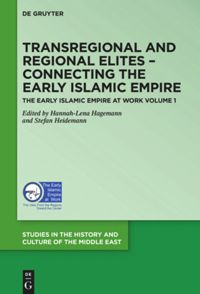
Open Access E-book: Transregional and Regional Elites – Connecting the Early Islamic Empire


Transregional and Regional Elites – Connecting the Early Islamic Empire

Volume 1

Edited by: Hannah-Lena Hagemann and Stefan Heidemann

De Gruyter | 2020

ISBN 9783110669800 (ebook)/ 9783110666489 (hardcover)

DOI: https://doi.org/10.1515/9783110669800

"Transregional and regional elites of various backgrounds were essential for the integration of diverse regions into the early Islamic Empire, from Central Asia to North Africa. This volume is an important contribution to the conceptualization of the largest empire of Late Antiquity. While previous studies used Iraq as the paradigm for the entire empire, this volume looks at diverse regions instead. After a theoretical introduction to the concept of ‘elites’ in an early Islamic context, the papers focus on elite structures and networks within selected regions of the Empire (Transoxiana, Khurāsān, Armenia, Fārs, Iraq, al-Jazīra, Syria, Egypt, and Ifrīqiya). The papers analyze elite groups across social, religious, geographical, and professional boundaries.

Although each region appears unique at first glance, based on their heterogeneous surviving sources, its physical geography, and its indigenous population and elites, the studies show that they shared certain patterns of governance and interaction, and that this was an important factor for the success of the largest empire of Late Antiquity" 

The contents of the book can be seen here