Wednesday, September 28, 2022

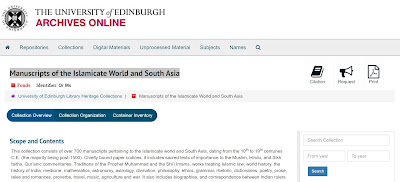
New OA Mss collection: Manuscripts of the Islamicate World and South Asia, University of Edinburgh


"Scope and Contents

This collection consists of over 700 manuscripts pertaining to the Islamicate world and South Asia, dating from the 10th to 19th centuries C.E. (the majority being post-1500). Chiefly bound paper codices, it includes sacred texts of importance to the Muslim, Hindu, and Sikh faiths, Qur’anic commentaries, Traditions of the Prophet Muhammad and the Shi’i Imams, works treating Islamic law, world history, the history of India, medicine, mathematics, astronomy, astrology, divination, philosophy, ethics, grammar, rhetoric, dictionaries, poetry, prose, tales and romances, proverbs, travel, music, agriculture and war. It also includes biographies, and correspondence between Indian rulers and dignitaries, and East India Company officials. 

Some of the collection’s manuscripts are among the most iconic items found at the University of Edinburgh Library, such as Qur’anic fragments in Kufic script on vellum, dating to around the 10th century (Os Ms 175), Rashīd al-Dīn’s Jamī al-Tawārīkh (Or Ms 20) and al-Bīrūnī's al-Āthār al-bāqiya (Or Ms 161), both richly illuminated examples of Islamic historiography dating to the 14th century C.E., and an 18th century Sanskrit scroll of the Hindu Mahābhārata featuring miniature illuminations and measuring over 70 metres (Or Ms 510). 

The grouping together of these items as one collection is the legacy of the route by which they reached the Library. It includes the vast majority of items formerly known as the "Oriental Collection"; the large donations that formed its basis were from the collections assembled by employees of the East India Company. This resulted in the collection incorporating material relevant to the Islamicate, largely gathered in South Asia, intertwined with items relevant to the Hindu and Sikh faiths, and the culture and history of South Asia more generally. The Turkish component of the collection includes manuscripts acquired in Astrakhan, with several early Ottoman texts. The items retain their "Or Ms" shelf mark to avoid creating a gap in the memory of their history. All catalogue records include the available provenance data. Research in this area is ongoing and such information will be expanded to include all details attesting the route of these items into the University of Edinburgh’s collections. 

Dates: 10th-19th centuries C.E. (bulk: post-1500 C.E.)

Language of Materials
Mainly in Persian and Arabic, but also Turkish, Sanskrit, Bengali, Hindustani, Malay, Panjabi, Prakrit, Syriac and Urdu.

Conditions Governing Access
Open. Please contact the repository in advance.
Extent

30 linear metres (approx)"

Manuscripts of the Islamicate World and South Asia: URL: https://archives.collections.ed.ac.uk/repositories/2/resources/86063 

Tuesday, September 27, 2022

New OA report: European Islamophobia Report (2021)


Foreword: 

"The state of Islamophobia in Europe continues to be problematic with many policies which we have criticised in previous reports being further implemented, such as the dissolution of Islamophobia watchdog organisations in France. Such developments show the end of a journey, built on Islamophobic exclusions, for politicians. This is why we have chosen Sebastian Kurz’s portrait for the cover of this year’s edition of the European Islamophobia Report. Kurz, who was hailed as a one-time political wunderkind by domestic Austrian and international media, came to power by making Islam and Muslims his number one target in election campaigns. More than that, he was the leader of a conservative government that implemented one anti-Muslim policy after the other, from hijab bans to the closure of mosques. Finally, the overwhelming allegations of corruption, especially in regards to the relationship between his government and the news media, forced him to step down. His political ‘career’ can be read as a textbook example of hegemonising Islamophobia and, at the same time, of how empty populism which is essentially built on anti-Muslim racism can end. Sebastian Kurz accumulated immense power by scapegoating and securitising Muslims, which in the end turned out only to be a screen to hide alleged corruption and increasing authoritarianism. Former justice minister Clemens Jabloner expressed this succinctly: Sebastian Kurz’s regime was “a first step in the direction of a new system of government (Staatsform).” Previous national reports on Austria in our European Islamophobia Report clearly show how the heavy investment in anti-Muslim policies by Kurz’s government were a marker of his increasingly manipulative and authoritarian policies. Eventually, the latter were terminated not least by the independent justice system that rescinded most of his anti-Muslim laws and measures from the hijab ban to the unlawful closure of mosques."

European Islamophobia Report (2021). URL: https://islamophobiareport.com/islamophobiareport-2021.pdf


Friday, September 23, 2022

New OA Book: Islamic Astronomy and Copernicus, Prof. Dr. Jamil Ragep


F. Jamil Ragep’in son kırk yılda yayınladığı 15 makaleyi bir araya getiren bu eser, İslam astronomi ve bilim geleneklerinin Kopernikçi Güneş merkezli sistemin ortaya çıkışına nasıl tesir ettiğine dair yeni bakış açıları ve derinlikli bir kavrayış öne sürüyor. Makaleler, Kopernik astronomisinin İslam astronomisindeki arka planına yönelik teknik ve içerik odaklı kanıtlar öne sürerken bu birikimin Orta Çağ ve Erken Modern dönem Avrupa entelektüel ve kültürel ortamlarına hangi tarihsel ve bilimsel bağlamlar çerçevesinde ulaştığını incelemenin önemine işaret ediyor. Ragep’in yeni soruları içeren ve birçok İslam, Latin ve Yunan bilim metnini incelemek suretiyle sıkı bir araştırma örüntüsü ortaya koyan makaleleri, İslam astronomlarıyla Kopernik arasındaki bağlantıyı kapsamlı bir çokkültürlü perspektiften incelemeye meraklı herkesin ilgisini çekecektir.

Yazar: Prof. Dr. Jamil Ragep

Ağustos 2022
ISBN: 978-625-8352-02-3
DOI: 10.53478/TUBA.978-625-8352-02-3

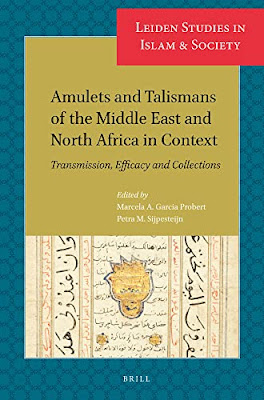
New OA Book: Amulets and Talismans of the Middle East and North Africa in Context Transmission, Efficacy and Collections (Brill)


Amulets and Talismans of the Middle East and North Africa in Context: Transmission, Efficacy and Collections


Series: Leiden Studies in Islam and Society, Volume: 13
Editors: Marcela A. Garcia Probert and Petra M. Sijpesteijn


In this volume amulets and talismans are studied within a broader system of meaning that shapes how they were manufactured, activated and used in different networks. Text, material features and the environments in which these artifacts circulated, are studied alongside each other, resulting in an innovative approach to understand the many different functions these objects could fulfil in pre-modern times. Produced and used by Muslims and non-Muslims alike, the case studies presented here include objects that differ in size, material, language and shape. What the articles share is an all-round, in-depth approach that helps the reader understand the complexity of the objects discussed and will improve one’s understanding of the role they played within pre-modern societies.


Contributors Hazem Hussein Abbas Ali, Gideon Bohak, Ursula Hammed, Juan Campo, Jean-Charles Coulon, Venetia Porter, Marcela Garcia Probert, Anne Regourd, Yasmine al-Saleh, Karl Schaefer and Petra M. Sijpesteijn.


Copyright Year: 2022


E-Book (PDF) Availability: Published ISBN: 978-90-04-47148-1


Publication date: 25 Apr 2022 Paperback Availability: Published ISBN: 978-90-04-47147-4 Publication date: 28 Apr 2022.


Amulets and Talismans: https://brill.com/view/title/60946.

Monday, August 1, 2022

OA Journal: رسلة المشرق (Risālat al-Mashriq)


Journal title: رسلة المشرق (Risālat al-Mashriq)

Published by: مركز الدراسات الشرقية: جامعة القاهرة (Centre for Oriental Studies, Cairo University)

Frequency: 1 issue per year. 

Articles published in Arabic. 


"تهدف المجلة لنشر الوعي بين الباحثين والشباب بالحضارة والتراث والآداب واللغات الشرقية وآدابها والتعريف بالمجتمعات التي تتحدث بهذه اللغات. تتميز المجلة بالجدية والأصالة ومواکبة المتغيرات والأحداث المرتبطة بالدراسات الشرقية (أدبية، لغوية، سياسية، اجتماعية، تاريخية، فلسفية)." 

URL: https://rmshreq.journals.ekb.eg/issue_13231_13271_.html


Wednesday, July 27, 2022

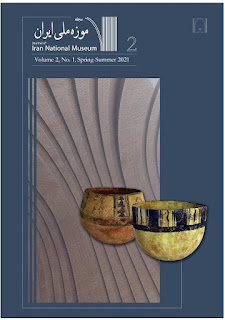
Open Access: Journal of Iran National Museum = Majallah-i Millī-i Īrān = مجله موزه ملی ایران


Title: Journal of Iran National Museum = Majallah-i Mūzih-i Millī-i Īrān = مجله موزه ملی ایران
Published: Iran National Museum, 2021-
Frequency: two issues per year
In English and Persian.
ISSN:    2783-2228


The journal publishes research and reports on all issues associated with museums and archaeology. It publishes two peer-reviewed issues per year in English and Persian.

The journal brings together curators, museum administrators, and archaeologists to present their research results about the museums and archaeology. Submissions must comply with the requirements set out in the instructions to contributors. The journal is open access and free to all individuals and institutions.

See the Alphabetical List of Open Access Journals in Middle Eastern Studies 

Tuesday, July 26, 2022

MOOC: The Cosmopolitan Medieval Arabic World

The Cosmopolitan Medieval Arabic World. A Massive Online Open Course (MOOC) on Medieval Abbasid Baghdad. To access the course it is necessary to register on the platform Coursera, registration and participation are free. "The intended audience is BA-students and/ or an interested general audience.

"In this online course we will focus on the fascinating history of the Medieval Arabic world. We will take you on a journey through the Middle Ages starting off in eighth-century Baghdad. Along the old pilgrim trails we will go to places like Mecca, Jerusalem and Najaf. We will visit the Abbasid court, the Harem of the caliph, and the palace of the Mamluk Sultan.

We will show you some beautiful medieval manuscripts that live on as the silent witnesses of the impressive achievements of scientists and medical doctors of this forgotten era. European scholarship in the Renaissance leaned heavily on the texts and inventions from the Middle East, which were the outcome of this sophisticated advanced society.

All along we will present you with historiographical debates and dilemma’s, reflecting on the way we look at and interpret history. And while taking you on this journey, we will travel back and forth in time explaining to you how events of the past affected and shaped the world as we know it today. Join us for the MOOC on The Cosmopolitan Medieval Arabic World!