Wednesday, April 12, 2017
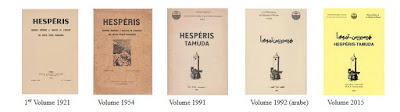
Open Access Journal Archive: Hespéris Tamuda (1921-2009)
Title: Hespéris Tamuda
Published : Rabat : Editions techniques nord-africaines, 1960-
Frequency : Annual
ISSN : 0018-1005
Text in: Arabic, Spanish, French, English
Hespéris began in 1921 as a merger between two older serials, "Archives Berberes" and the Bulletin of l'Institut des Hautes-Études Marocaines. In 1960, it merged with another serial, "Tamuda", to become "Hespéris-Tamuda",
See also: Alphabetical List of Open Access Historical Newspapers and Other Periodicals in Middle East & Islamic Studies
Thursday, April 6, 2017
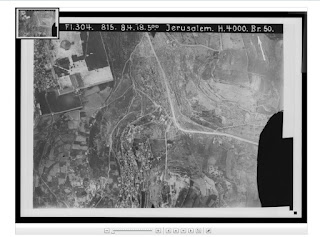
The Bavarian Air Force World War I Aerial Photography of Palestine = Bayerisches Hauptstaatsarchiv: Bildsammlung Palästina
"The 2,872 photographs, comprising both aerial and ground photographs that are
now available on the website of the Central State Archive of the Bavarian State Office
for Surveying, constitute an important resource for the study of many aspects of the
landscape of Palestine and other territories at the end of Ottoman rule in the region.
These photographs offer an overview of the region’s topography as it was almost one
hundred years ago, and as such are of great significance to geographers, historians, and
researchers working on urban cultural history "
See also: Mapping Palestine: The Bavarian Air Force WWI Aerial Photography
Friday, March 31, 2017
Arabic Almanac App
Arabic Almanac App
By Omar Jahangir
By Omar Jahangir
Description
Arabic Almanac is a digital version of the famous Hans Wehr dictionary. You can search through the dictionary by using the root letter of the word and the app will display the corresponding page from the Hans Wehr dictionary. This app was developed to aid students of the Arabic Language in their noble pursuit. The app will remove the need of carrying around a bulky dictionary and replace it with the convenience of your smartphone. Now you have access to all the same information, but at the comfort of your fingertips. The dictionary can be searched using an Arabic keyboard, or if you do not have an Arabic keyboard the dictionary can be searched using Roman (English) letters which have an Arabic equivalent. Feel free to add any comments/improvements by emailing arabic.almanac@gmail.com This app could not have been made without the immense contribution from E.Taal and U.Iqbal. I pray that Allah (swt) reward them and their families for their contribution to this app. Please also remember this developer and his family in your duas. ...More Arabic Almanac Support
What's New in Version 1.3
Salaams all! A few updates for Arabic Almanac. •Removed the “loading” that would appear at the end of the pag
Compatibility: Requires iOS 8.0 or later. Compatible with iPhone, iPad, and iPod touch
Free- Category: Education
- Updated: Oct 10, 2016
- Version: 1.3
- Size: 82.6 MB
- Language: English
- Seller: Omar Jahangir
- © Omar Jahangir
Open Access Repository of the Katedra Arabistyki i Islamistyki Uniwersytetu Warszawskiego
Katedra Arabistyki i Islamistyki Uniwersytetu Warszawskiego jest największym centrum badań w zakresie arabistyki i islamistyki w Polsce. Z początku arabistyka w Instytucie Orientalistycznym UW była połączona z pokrewnymi dziedzinami – turkologią i iranistyką. Dzięki staraniom J. Bielawskiego w 1964 roku została powołana Katedra Arabistyki, a co za tym idzie, arabistyka uzyskała samodzielny byt. Po licznych przekształceniach jednostka została ponownie przemianowana na Katedrę Arabistyki i Islamistyki w 2009 roku i obecnie jest jedną z trzech największych jednostek naukowych Wydziału Orientalistycznego UW.
Przy Katedrze działa największa biblioteka arabistyczno-islamoznawcza w Polsce, która gromadzi publikacje nie tylko z zakresu arabistyki i islamistyki, ale również pokrewnych specjalizacji orientalistycznych oraz nauk pomocniczych. Katedra prowadzi studia w zakresie arabistyki i islamistyki. Nabór odbywa się rokrocznie, a od roku 2007/2008 wprowadzony został podział na studia pierwszego i drugiego stopnia. W następnym roku rozpoczęto również nabór na studia niestacjonarne (wieczorowe) pierwszego stopnia. W Katedrze Arabistyki i Islamistyki studiują także doktoranci Wydziału Orientalistycznego UW, którzy prowadzą badania literaturoznawcze oraz językoznawcze z zakresu arabistyki i islamistyki.
Collections in this community
Recent Submissions
Mowa ciała: od jawnej do ukrytej
Machut-Mendecka, Ewa (Uniwersytet Warszawski, Katedra Arabistyki i Islamistyki, 2016)Świat arabski jest żywiołowy, jego mieszkańcy nie żałują gestów, ruchów i mimiki, przy pomocy których zwracają się nieustannie do otoczenia i rozmówców, dając upust emocjom. To zachowanie wynika z postawy ...„Czy możemy poprawiać i kształtować nasze ciała poprzez sport?” – ciało a sport w kulturze muzułmańskiej
Pachniak, Katarzyna (Uniwersytet Warszawski, Katedra Arabistyki i Islamistyki, 2016)Islam reguluje i normuje każdą sferę życia, zatem również dla wszelkiej aktywności związanej z szeroko rozumianym sportem muzułmanie starali się, i nadal starają, znaleźć podstawy w religii. Szukają ich poprzez ...Ciało w kulturze muzułmańskiej
Pachniak, Katarzyna; Nowaczek-Walczak, Magdalena (Uniwersytet Warszawski, Katedra Arabistyki i Islamistyki, 2016)Praca została podzielona na cztery umowne części, omawiające różne aspekty cielesności, chociaż większość artykułów trudno zamknąć w ramkach określonych kategorii. W pierwszej, zatytułowanej „Ciało w procesie ...Azja i Afryka: religie - kultury - języki
Klimiuk, Maciej (Wydział Orientalistyczny, Uniwersytet Warszawski, 2013)Książka Azja i Afryka. Religie – kultury – języki jest publikacją zbiorową, o charakterze naukowym. Przedstawia dokonania najmłodszych badaczy, skupionych wokół Wydziału Orientalistycznego Uniwersytetu Warszawskiego. W ...Flavorings in Context: Spices and Herbs in Medieval Near East
Lewicka, Paulina B. (Rocznik Orientalistyczny, 2011)Throughout history, the approach towards imported spices varied from culture to culture. In medieval and early post-medieval Europe, where spices became an exotic object of temporary desire, they were often used unskillfully ...The Doctrine of muḫammisa according to Muslim Heresiography
Pachniak, Katarzyna (Rocznik Orientalistyczny, 2011)The article presents the doctrine of muẖammisa according to Muslim heresiography. The muḫammisa is one of ġulāt groups. This term is applied to groups accused of exaggeration (ġuluww) in religion and has covered a lot of ...Al-Ǧāḥiẓ and ‘Abd al-Ǧabbār on the Necessity of Imamate. A Note on the Fate of Mu‘tazilite Political Ideas
Danecki, Janusz (Rocznik Orientalistyczny, 2011)The article is devoted to some aspects of the political theory of the eminent Arab thinker Al-Ǧāḥiẓ (d. 869), especially in the context of his influence on later generations of religious and political thinkers, in this ...The Grammatical Treatise Al-Mufaṣṣal fī ṣan‘at al-i‘rāb of Abū al-Qāsim az-Zamaḫšarī (Died 1144 A.D.) – a Masterpiece of Arab Grammar
Grodzki, Marcin (Rocznik Orientalistyczny, 2011)Abū al-Qāsim az-Zamaḫšarī’s (1075–1144) grammatical treatise Al-Mufaṣṣal fī ṣan‘at al-i‘rāb is one of the main and most acknowledged philological masterpieces of the classical Arabic. The aim of this article is to shed ...Šawqī Ḍayf (1910–2005). Biography, Method, Bibliography
Dziekan, Marek M. (Rocznik Orientalistyczny, 2011)The Article contains a biography and full bibliography of an eminent Egyptian scholar in the field of literature and linguistics, Šawqī Ḍayf.A Bibliography of the Works of Professor Krystyna Skarżyńska-Bocheńska
Dziekan, Marek M. (Rocznik Orientalistyczny, 2011)The bibliography of the works of Professor Krystyna Skarżyńska-Bocheńska.The Ways of Expression of Cultural Norms in the Egyptian Dialect
Machut-Mendecka, Ewa (Rocznik Orientalistyczny, 2011)In this paper I am going to present the ways in which the Egyptian dialect renders social norms, which will be illustrated by the examples of expressions regarding human- to-human interaction. This provides an outline of ...A Bibliography of the Works of Professor Danuta Madeyska
Dziekan, Marek M. (Rocznik Orientalistyczny, 2011)The bibliography of the works of Professor Danuta Madeyska.Professor Krystyna Skarżyńska-Bocheńska
Wrona, Barbara (Rocznik Orientalistyczny, 2011)Professor Danuta Madeyska
Wrona, Barbara (Rocznik Orientalistyczny, 2011)Sīrat al-Ǧāḥiẓ. Volume in Honour of Krystyna Skarżyńska-Bocheńska and Danuta Madeyska
Dziekan, Marek M.; Pachniak, Katarzyna; Lewicka, Paulina B. (Rocznik Orientalistyczny, 2011)Volume in Honour of Prof. Krystyna Skarżyńska-Bocheńska and Prof. Danuta Madeyska, Department of Arabic and Islamic Studies, Faculty of Oriental Studies, University of Warsaw.An Alternative Insight into the First Centuries of Islam on the Iberian Peninsula – Problems of Historiographic Sources Concerning the Early Islamic History of Al-Andalus
Grodzki, Marcin (Rocznik Orientalistyczny, 2012)The stream of historical revisionism within the Orientalist scholarship has offered in recent years a number of intriguing theories attempting to undermine some of the conventional concepts of the Arab-Muslim early history ...La Tunisie musulmane, pays à un riche passé chrétien et un présent tolérant
Parzymies, Anna (Studia Arabistyczne i Islamistyczne, 1996)En avril 1996 le pape Jean Paul II a effectué une visite officielle en Tunisie. Après le Maroc, la Tunisie a été le deuxième pays de l’Afrique du Nord où s’est rendu le Souverain Pontife. Dans son discours devant le pape, ...Origins and reasons of the Gulf conflict of 1990/1991
Jamsheer, Hassan (Studia Arabistyczne i Islamistyczne, 1996)The Gulf conflict of 1990/1991 was not an incidental event, but the climax in a long chain of events. The deeper causes have their historical, ideological, political, economic and psychological roots. In general, the causes ...Egypt’s Arabism: Aḥmad Ḥasan az-Zayyāt: From Islam’s Community to the wide Pan-Arab Nation in the 1930s and 1940s
Walker, Dennis (Studia Arabistyczne i Islamistyczne, 1996)Az-Zayyāt often felt strong supra-Arab Islamic community emotions in topical contemporary contexts and perpetuated themes about pristine classical Islam from the old pre-World War I type of political pan-Islamism in Egypt. ...Searching for the origins of things. On the ‘ilm al-awā’il in the culture of the Arabic Middle Ages
Dziekan, Marek M. (Studia Arabistyczne i Islamistyczne, 1996)It is not certain, either, if knowledge of the origins was treated, in Arabic culture, as a separate branch of knowledge or as an element of history or adab literature. Works as Kitāb al-awā’il by Al-‘Askarī or Al-Wasā’il ...
Thursday, March 23, 2017
Open Access E-book: The Teaching and Learning of Arabic in Early Modern Europe
Title: The teaching and learning of Arabic in early modern Europe
Author: Jan Loop; Alastair Hamilton; Charles Burnett
Publisher: Leiden ; Boston : Brill, 2017.
Series: The history of Oriental studies, volume 3
ISBN: 9789004338623
Contents:
Introduction / Jan Loop --
Arabic studies in the Netherlands and the prerequisite of social impact: a survey / Arnoud Vrolijk --
Learning Arabic in early-modern England / Mordechai Feingold --
Johann Zechendorff (1580-1662) and Arabic studies in Zwickau's Latin school / Asaph Ben-Tov --
Arabia in the light of the midnight sun: Arabic studies in Sweden: between Gustaf Peringer Lillieblad and Jonas Hallenber / Bernd Roling --
Sacred history, sacred languages: the question of Arabic in early modern Spain / Mercedes Garcia-Arenal and Fernando Rodriguez Mediano --
The teaching and learning of Arabic in Salamanca in the early modern period / Nuria Martinez-de-Castilla-Munoz --
Teaching and learning Arabic in early modern Rome: shaping a missionary language / Aurelien Girard --
The Qur'an as chrestomathy in early modern Europe / Alastair Hamilton --
Arabic poetry as teaching material in early modern grammars and textbooks / Jan Loop --
Learning to write, read and speak Arabic outside of early modern universities / Sonja Brentjes --
Learning Arabic in the overseas factories: the case of the English / Simon Mills --
Learning oriental languages in the Ottoman Empire: Johannes Heyman (1667-1737) between Izmir and Damascus / Maurits H. van den Boogert --
The life and hard times of Solomon Negri: an Arabic teacher in early modern Europe / John-Paul Ghobrial.
Wednesday, March 22, 2017
Newly Open Access Journal: Anatoli: De l’Adriatique à la Caspienne. Territoires, Politique, Sociétés
Anatoli: De l’Adriatique à la Caspienne. Territoires, Politique, Sociétés
ISSN électronique 2498-0730
Anatoli est une publication annuelle consacrée à l’étude pluridisciplinaire de l’espace qui s’étend de l’Adriatique à la Caspienne. Elle s’intéresse aux cultures - grecque, latine, slave, turque, persane, géorgienne, arménienne, juive, etc. - qui l’ont habité et façonné. Les territoires de cet espace, aujourd’hui fragmenté, furent jadis unifiés, au moins partiellement, par les pouvoirs impériaux, dont le dernier fut l’empire ottoman. Ils en gardent bien des traits communs, souvent sous forme latente. L’importance de cet espace pour l’Union européenne est une évidence.
- 6 | 2015
Patrimoines culturels et fait minoritaire en Turquie et dans les Balkans- 5 | 2014
Configurations économiques dans l’espace post-ottoman- 4 | 2013
Géopolitique des civilisations. Huntington, 20 ans après- 3 | 2012
La Turquie, au carrefour des turbulences migratoires- 2 | 2011
Représentations du monde dans l’espace postsoviétique- 1 | 2010
Pour une nouvelle Entente balkanique
Wednesday, March 15, 2017
Open Access Atlas: Middle East & North Africa
Atlas: Middle East & North Africa
Published by: Austrian Federal Ministry of the Interior,
50 pages
Year: 2017
ISBN: 9780903109032
Table of contents:
Contents
Legend..................................6
Regional overview................8
Topography
North Africa 1.........................10
North Africa 2.........................12
Middle East 1..........................14
Middle East 2..........................16
Arabian Peninsula...................18
Religious groups
North Africa 1.........................20
North Africa 2.........................12
Middle East 1..........................24
Middle East 2..........................26
Arabian Peninsula...................28
Ethnic groups
North Africa 1.........................30
North Africa 2.........................32
Middle East 1..........................34
Middle East 2..........................36
Arabian Peninsula...................38
Oil and gas fields
North Africa 1.........................40
North Africa 2.........................42
Middle East 1..........................44
Middle East 2..........................46
Arabian Peninsula...................48
See also: Open Access Atlas: Syria & Iraq
Subscribe to:
Comments (Atom)