Tuesday, November 6, 2018

Bibliography of the Arabic Bible: A Classified and Annotated History of Scholarship

Bibliography of the Arabic Bible: A Classified and Annotated History of Scholarship
https://biblia-arabica.com/bibl/$app-root/resources/img/bibl-banner.png
In this research tool, we seek to provide a comprehensive and fully annotated bibliography of text editions and research in the field of Arabic Bible. Historical translations of the Bible into Arabic comprise countless manuscripts and fragments from the medieval period found in monasteries throughout the Middle East and libraries across the globe, as well as early and recent prints produced in Europe and in Arabic-speaking lands. These translations were made by Jews, Christians, and Samaritans, and were also used by Muslims in their discussions with members of the other Abrahamic religions. Arabic versions of the Bible were also translated from biblical materials in many different source languages, including Hebrew, Aramaic (Jewish Aramaic and Syriac), Latin, Greek, Coptic. This Bibliography of the Arabic Bible aims to aims to capture the history of research to date and to encompass the entire breadth of these translations, in keeping with the focus of the original research project, Biblia Arabica: The Bible in Arabic among Jews, Christians and Muslims.

Collections

Generalia

Edited by Ronny Vollandt

Gospels

Edited by Robert Turnbull and Vevian Zaki

Pauline Epistles

Edited by Vevian Zaki

Qaraite Translations

Edited by Michael Wechsler and Ronny Vollandt

Tuesday, July 17, 2018

Mapping Islamophobia – Visualizing Islamophobia and Its Effects

http://mappingislamophobia.org/

Mapping Islamophobia – Visualizing Islamophobia and Its Effects

"Mapping Islamophobia is a project headed by Grinnell College history and religious studies professor Caleb Elfenbein, with contributions from a number of Grinnell College students and technical support from Mike Conner. The project utilizes a series of powerful interactive maps that document incidents of violence, discrimination, and bias targeting Muslim individuals and communities in the United States. One such map, along with an accompanying interactive timeline, allows visitors to view the prevalence of Islamophobia between the years 2011 and 2018. In addition, these maps allow visitors to investigate Islamophobic incidents by incident type (including legislation, public campaigns, and crimes against people) and the gender of the targeted individual. The team behind Mapping Islamophobia collected information about these incidents from a variety of "media outlets with clear editorial oversight." By selecting individual pins on these maps, visitors can learn more about specific incidents and news sources. The Mapping Islamophobia project also contains Countering Islamophobia, an interactive map that documents "how American Muslim communities have responded to the increasing presence of anti-Muslim hostility in American public life over time." This map highlights community outreach activities, interfaith initiatives, and more."
[Description from Scout Report]

Thursday, July 5, 2018

Akkasah, the Center for Photography at New York University Abu Dhabi

http://akkasah.org/

"Akkasah, the Center for Photography at New York University Abu Dhabi, is home to an archive of the photographic heritage of the Middle East and North Africa. The Center is dedicated to documenting and preserving the diverse histories and practices of photography from the region, and our growing archive contains at present over 60,000 images"

Browse By:

Friday, June 22, 2018

Open Access Newspaper Archive: الهدى = al-Hoda = al-Hudá = Jarīdat al-Hudá [1898-1904]

 الهدى = al-Hoda = al-Hudá = Jarīdat al-Hudá
Publisher:     Philadelphia, Pa. : N.A. Mokarzel,


Available issues: March 1, 1898 - June 30, 1904
"Al-Hoda, or الهدى, [The Guidance] was the longest-lived of the early Arabic newspapers, published from 1898 until 1972. It was distinguished by its wide circulation--which ranged throughout North America but also stretched, by some claims, across 40 countries worldwide--and its corresponding transnational sphere of influence. Throughout its 74-year run it was owned and published by the Mokarzels, an influential family of Lebanese-Americans: it passed from the hands of its founder Naoum Antoun Mokarzal to his brother Salloum Antoun Mokarzel; upon Salloum’s death in 1952 it was published by Salloum’s daughter Mary Mokarzel. It served as an outlet for the Mokarzel brothers to shape both the Lebanese independence movement and to craft and transmit cultural and linguistic cohesion throughout the mahjar, or Arabic diaspora. In addition to its close association with Naoum and Salloum Mokarzel, it was a launching point and platform for the careers of many important writers; significantly, it published work by the women writers Marie T. Azeez and Afifa Karam. It also published numerous pieces from foreign correspondents throughout the Arab world. Though its format and content shifted throughout the decades, particularly as ownership changed hands between members of the Mokarzel family, Al-Hoda was consistent in its journalistic commitment to transnational issues and events and its  engagement with the Arabic-speaking diaspora."
See also: Digitized Newspapers and Journals from the  Moise A. Khayrallah Center for Lebanese Diaspora Studies from North Carolina State University.

         See: Alphabetical List of Open Access Historical Newspapers and Other Periodicals in Middle East & Islamic Studies

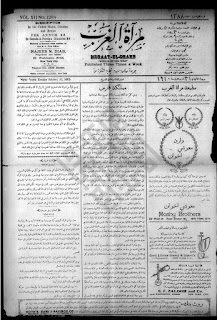
Open Access Newspaper Archive: Mira’at al-gharb = مرآة الغرب = Meraat-ul-gharb = Mirror of the West [1910-1922, 1925-1927]

http://lebanesestudies.omeka.chass.ncsu.edu/items/browse?collection=71
Mir’āt al-gharb : jarīdah siyāsīyah adabīyah tijārīyah intiqādīyah ḥurrah 

Publisher: New York [N.Y.] : Najīb Mūsá Diyāb, 1899-1961.
Available issues:  September 1910-April 20 1922 and August 12 1925-June 30 1927.

Other titles: مرآة الغرب = Meraat-ul-gharb = Mirror of the West

"Mira’at al-Gharb, [Mirror of the West], was one of the longest-running Arabic newspapers in the United States, published from 1899 until 1961. It was founded by Najeeb Diab and owned by his family until its closure. In addition to its significant longevity, Mira’at al-Gharb is important for its affiliation with the Orthodox faith. As a counterpoint to the Maronite viewpoints that are often predominantly associated with the early Syrio-Lebanese immigrants, Mira’at al-Gharb provides valuable insight into the religious, political, and intellectual diversity of the early immigrants from Greater Syria..."
See also: Digitized Newspapers and Journals from the  Moise A. Khayrallah Center for Lebanese Diaspora Studies from North Carolina State University.


See: Alphabetical List of Open Access Historical Newspapers and Other Periodicals in Middle East & Islamic Studies

Wednesday, June 20, 2018

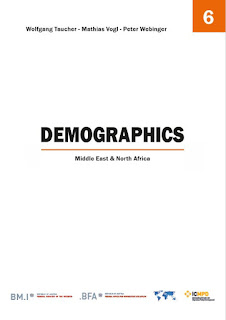
Demographics: Middle East & North Africa


http://www.bfa.gv.at/files/broschueren/publicae_demographics_neu_WEB.pdf

Title: Demographics : Middle East & North Africa
Authors:     Thomas Schrott; Wolfgang Taucher; Peter Webinger; Alexander Schahbasi; Mathias Vogl
Publisher:     Vienna: Austrian Federal Ministry of the Interior,
Date: 2018.
Series:     Regiones et res publicae : country analysis reports, 6

37 pages, maps
ISBN:      9783903109094

Table of contents:
Preface 5
North Africa 6
Morocco 8
Algeria 10
Tunisia 12
Libya   14
Egypt   16
Middle East 18
Turkey 20
Syria  22
Jordan 24
Iraq   26
Iran (Islamic Republic of) 28
Afghanistan 30
Pakistan    32
Sources     35
Imprint     37

Friday, June 1, 2018

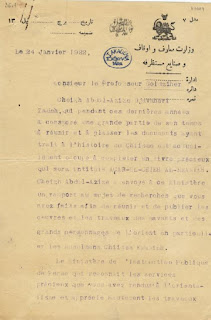
Ignaz Goldziher's Correspondence Archive


http://real-ms.mtak.hu/view/collection/Goldziher_bequest.html


The Correspondence of Ignaz Goldziher
An online database of over 13000 letters in the Library of the Hungarian Academy of Sciences

Includes letters to/from :
`Alī, Mubārak
Andræ, Tor
Arnold, Thomas Walker
Babinger, Franz
Ben Yehuda, Eliezer
Brockelmann, Carl
Buber, Martin
Darmesteter, James
Doutté, Edmond
Gaudefroy-Demombynes, Maurice
Goeje, Michael Johan de
Hampel, József
Harrassowitz, Otto
Herzfeld, Ernst
Horovitz, Josef
Jacob, Georg
Lőw Immánuel
Nöldeke, Theodor
Snouck Hurgronje, A. M
Vámbéry, Ármin
Zaydān, Ğirğī (Jirjī)
and many others.